


Project: Palm-Orwood
A Forest Among Farmland
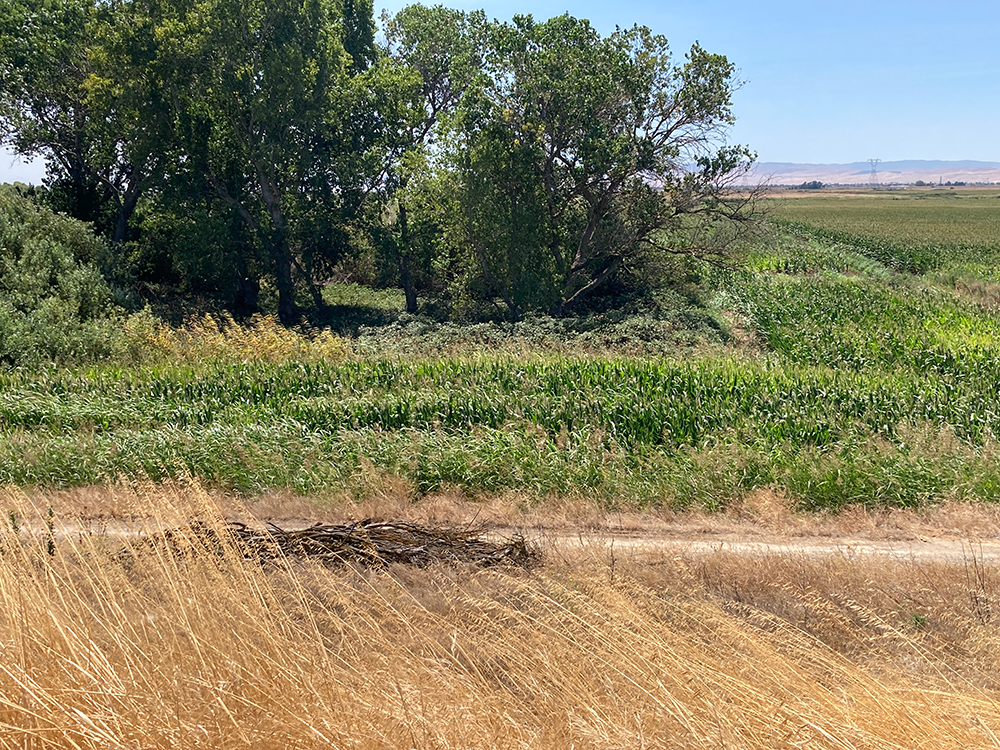
In Contra Costa County's Sacramento–San Joaquin River Delta, the Palm-Orwood Tract is a landscape where agriculture and habitat conservation exist side by side. These low-lying islands are dominated by productive farmland, with crops including corn, alfalfa, wheat, almonds and walnuts, alongside areas used for cattle grazing.
Within this working landscape, a designated mitigation site is being stewarded to preserve and develop cottonwood-willow riparian forest. The forest compensates for riparian habitat impacted by a construction project, creating a long-term responsibility to maintain its ecological value.
CCRCD EcoStewards work on the ground to help that forest thrive. Their efforts focus on maintaining existing trees, managing invasive plants and establishing new layers of native vegetation. Rather than treating restoration as a one-time planting project, the team approaches Palm-Orwood as a living system that needs continued attention as it grows.
Caring for the Existing Forest
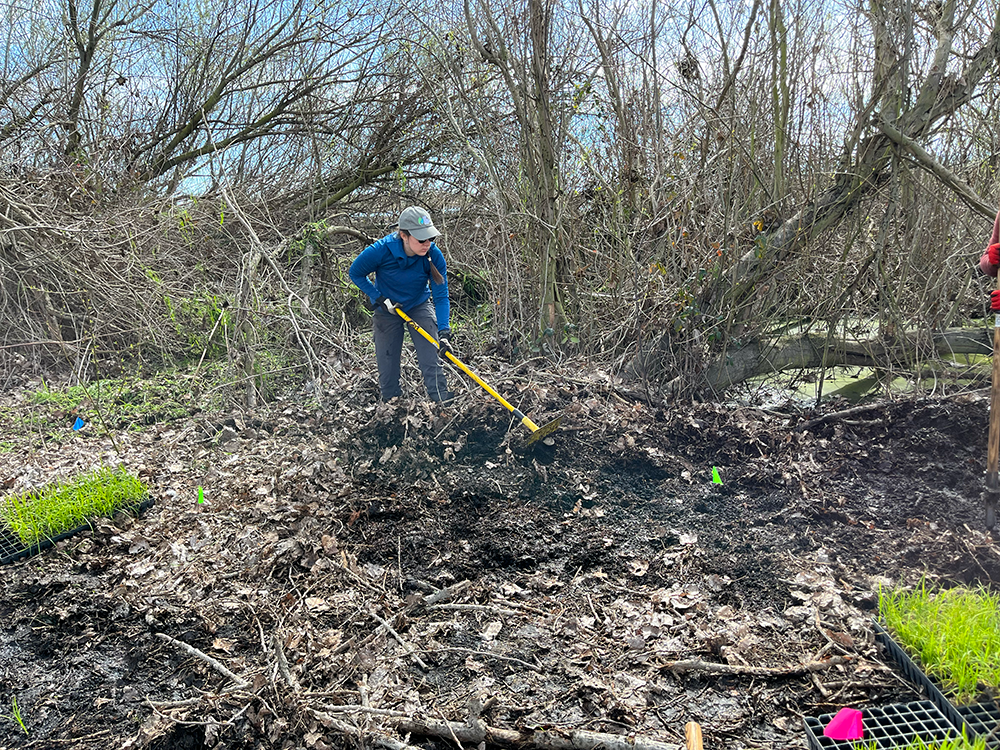
A healthy forest depends on protecting the trees already growing there, not just planting new ones. At Palm-Orwood, mature cottonwoods and willows form the foundation of the riparian forest, providing shade, habitat structure and the beginnings of a canopy that future generations of plants and wildlife can depend on.
EcoStewards help maintain this foundation by clearing fallen woody debris and managing vegetation around existing trees. Using chainsaws and other field tools where appropriate, they remove accumulated branches that need to be cleared while working carefully around living vegetation and naturally regenerating saplings.
This work requires distinguishing between material that should be removed and growth that should be protected. Young trees may be easy to overlook among surrounding vegetation, yet they are essential to the forest's future. By caring for established trees and encouraging natural regeneration, EcoStewards help preserve the structure of the forest while preparing it for continued growth.
Managing Invasive Plants
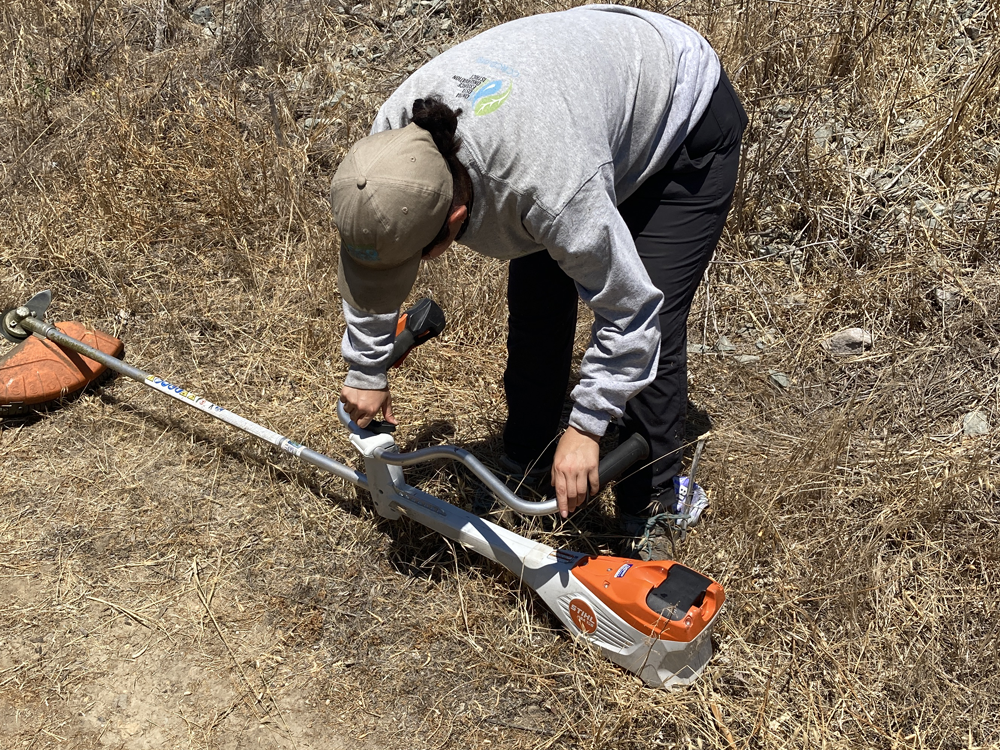
Invasive plants can gradually change a forest by competing with native species for space, sunlight and other resources. At Palm-Orwood, EcoStewards manage Himalayan blackberry, Johnson grass, prickly lettuce and other unwanted vegetation to help native plants establish and thrive.
This work involves more than clearing visible growth. Invasive species may return after treatment, so crews must revisit areas, recognize new growth and adjust their approach over time. Meanwhile, native plants and naturally seeded trees need to be protected from accidental damage during maintenance.
Careful vegetation management creates opportunities for a more diverse forest understory and helps young plants receive the light and space they need. It also supports the broader goal of maintaining the site's intended riparian habitat over the long term.
For EcoStewards, invasive plant management is an ongoing part of forest care. Each treatment helps reduce competition and gives native vegetation a better chance to become established, strengthening the foundation for a resilient forest.
Building the Forest's Layers
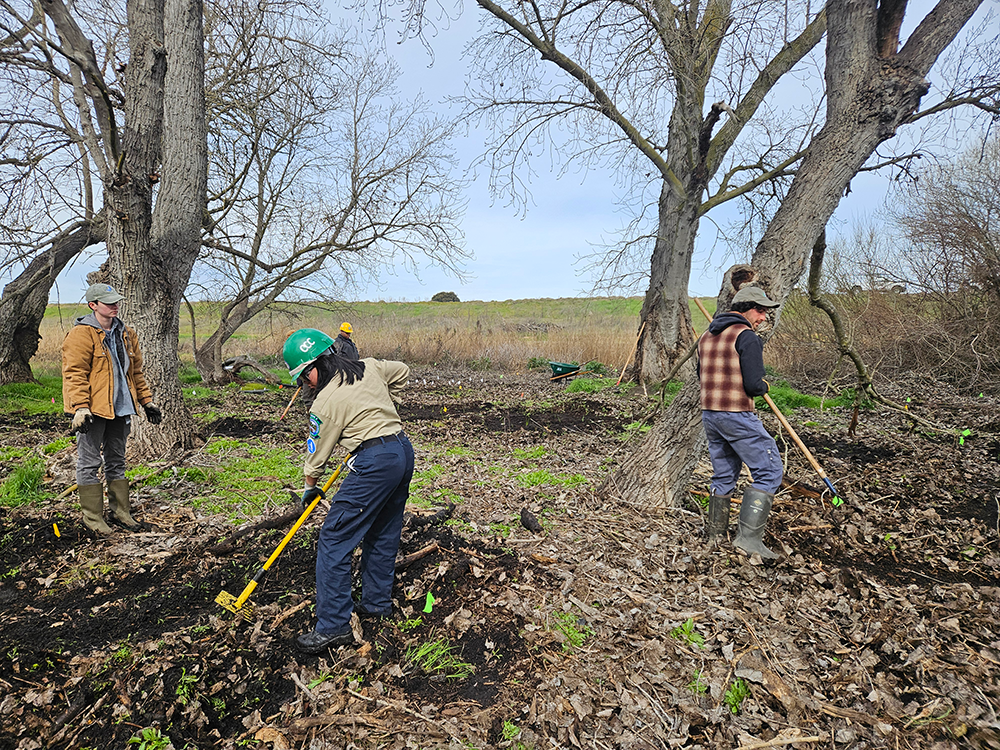
A resilient forest is made up of more than tall trees. Its understory, midstory and canopy each contribute to the structure and diversity that allow a riparian ecosystem to develop. At Palm-Orwood, EcoStewards are building these layers in stages, giving the forest a stronger foundation for the decades ahead.
The understory has been planted with native sedges and rushes, including various Carex and Juncus species. These plantings have thrived over approximately the past year and a half, allowing the team to begin focusing on the midstory.
Planned midstory species include mugwort, elderberry and buttonbush, which will add variety between the low-growing vegetation and taller trees. Each layer contributes different forms of cover and habitat, creating a more complex plant community than a forest dominated by trees alone.
By planning plantings together, EcoStewards are helping establish a forest that can mature as a connected ecosystem rather than a collection of individual plants.
Preparing the Next Canopy
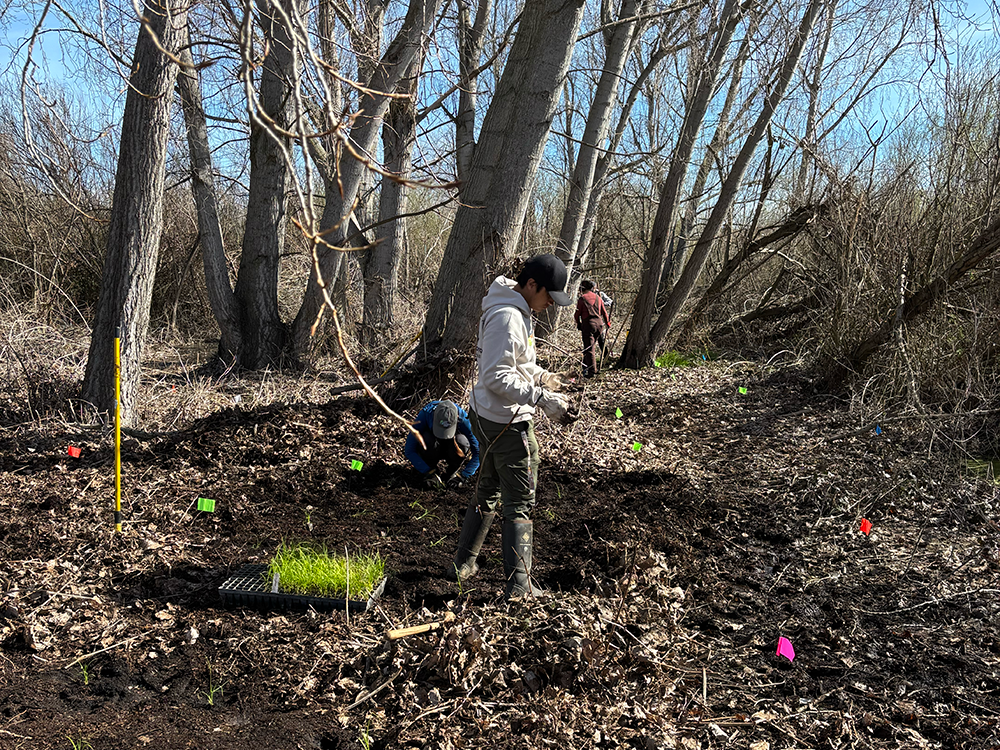
The forest canopy visible today will not last forever without a new generation of trees ready to replace aging growth. At Palm-Orwood, EcoStewards are planning ahead by planting trees and protecting naturally seeded saplings that can eventually become part of the mature canopy.
This work takes patience. Young trees may need years or decades to reach the size and structure of established cottonwoods and willows. In the meantime, competing vegetation must be managed, and developing plants need room to grow.
EcoStewards combine intentional planting with natural regeneration, recognizing that both approaches can contribute to the forest's future. Clearing vegetation around promising saplings helps reduce competition and gives them a better chance to survive. Additional plantings help support the long-term goal of maintaining a healthy, continuous canopy.
The result will not be immediate. Forest stewardship is an investment measured in years, with today's decisions shaping the habitat and landscape that future generations will inherit.
Challenges of Forest Stewardship
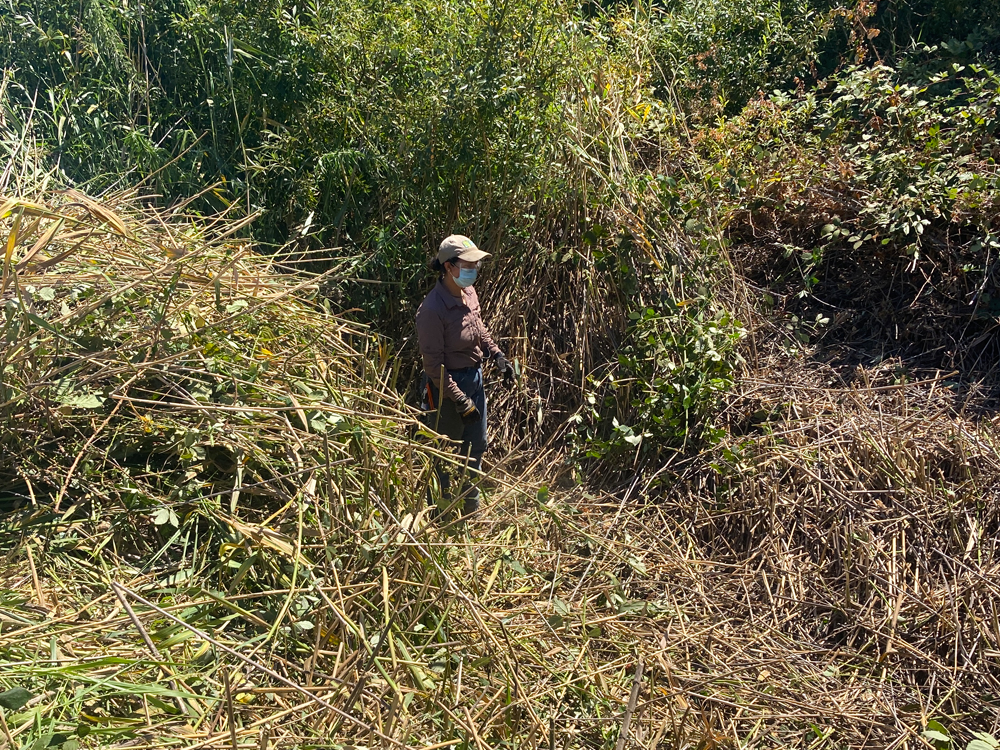
Working within a riparian forest presents challenges that change with the season and the needs of the site. At Palm-Orwood, EcoStewards must balance invasive plant control, debris removal, new planting and protection of existing vegetation—all while keeping the long-term health of the forest in view.
Fallen branches can require chainsaws and careful handling, while invasive plants may grow among the native species the team is trying to protect. Young saplings can be difficult to distinguish within dense vegetation, and newly planted sedges, rushes and shrubs need time to establish before the next stage of planting can succeed.
The forest also follows its own pace. Planting plans must respond to how vegetation performs in actual field conditions rather than relying on a fixed timeline. EcoStewards observe which species thrive, identify areas needing additional attention and adapt their work accordingly.
These challenges make stewardship an ongoing process of practical problem-solving, careful observation and patience.
A Forest for Decades Ahead
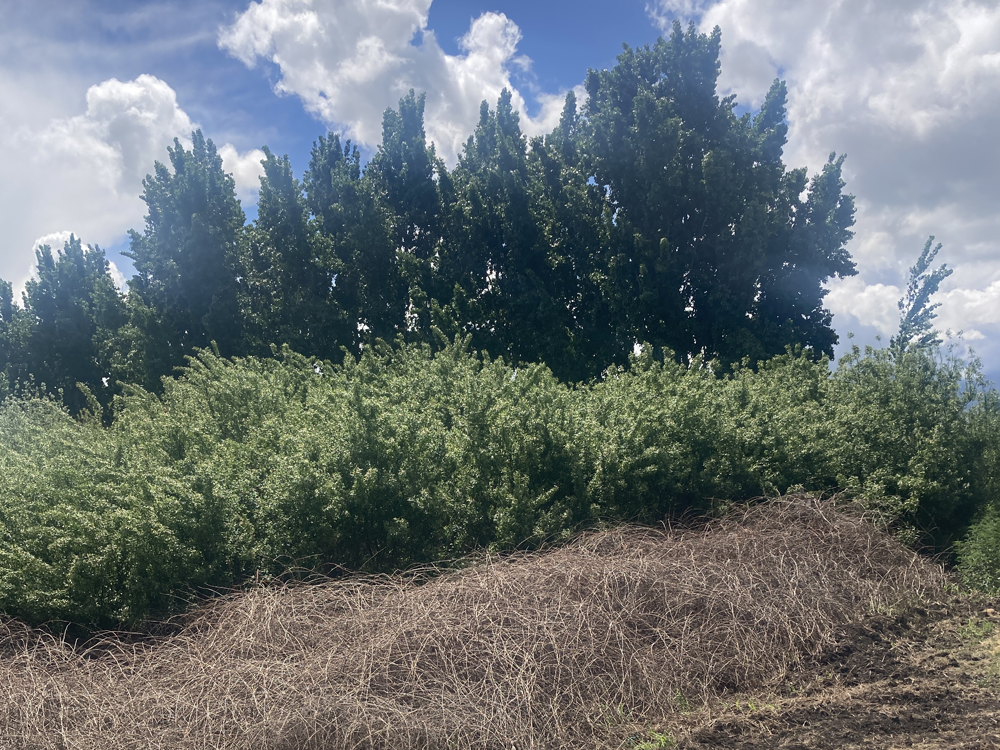
The future of Palm-Orwood depends on maintaining a healthy riparian forest long after individual planting seasons are over. CCRCD EcoStewards are working toward that future by caring for established cottonwoods and willows, managing invasive species, expanding native understory and midstory vegetation, and preparing the next generation of trees.
As the planted sedges and rushes continue to grow, the addition of shrubs and new trees will help create a more layered forest. Over time, these plant communities can provide a broader range of habitat and help sustain the site's intended ecological function.
Because Palm-Orwood is a mitigation site, long-term stewardship is especially important. The goal is not simply to establish vegetation today, but to maintain the riparian forest as a functioning habitat for decades to come.
Every cleared patch of invasive growth, protected sapling and successful planting contributes to that vision. The work may be gradual, but its purpose is lasting: helping ensure that the forest continues to grow, mature and support life into the future.

Ben Weise
Skills: Permitting, conservation on agricultural land, illegal dumping prevention.
Fun Fact: Eagle Scout, former member of the University of California Marching Band, aspiring birder, and a Contra Costa native raised in Southern California.
Ben Weise
Ben started working with Contra Costa RCD in January 2017 after receiving two Masters degrees from Indiana University in Natural Resource Management and Environmental Policy following undergraduate studies at UC Berkeley. Ben manages the Voluntary Local Program, the EcoStewards Program, and other conservation programs focused on agricultural lands.

Adam Gelfand
Skills: Field Data Collection, Tree Physiology, Habitat Monitoring, Outreach.
Fun Fact: Loves to cook Middle Eastern food, surf, write folk music, and doesn't think the wilderness exists.
Adam Gelfand
Adam grew up in New Jersey where they spent their childhood looking for bugs and coming up with new names of plants. Their first ecological position was selling Christmas trees as a teen. Afterwards, they went to Warren Wilson College in Asheville, NC where they spent four years working on an organic vegetable farm and earning a degree in Environmental Education. Seeking a way to be of service during the pandemic, they then moved to New York City to teach conservation biology to communities traditionally underserved by environmental education. Adam has grown to identify as an ecologist and conservationist who sees the world through the eyes of trees. They recently earned a graduate degree where they studied the relationship between Indigenous fire history, carbon sequestration, forest compositional shifts, and tree rings. Adam is excited to join CCRCD and face all the exciting challenges that come with restoring habitats.

Jules Mackey
Skills: Camera trapping, California wildlife and plant identification, data management, conservation education.
Fun Fact: Loves birding, rock climbing, fashion, hiking, and cooking Filipino food.
Jules Mackey
I grew up spending a lot of time exploring nature in my hometown, San Diego, and while camping throughout the western United States.
My passion for conservation led me to pursue an education at UC Davis, where I graduated in 2022 with a B.S. in Environmental Science & Management, and a minor in Wildlife, Fish, and Conservation Biology. Prior to joining CCRCD, I've performed field monitoring in the Delta and Bay area. At CSTARS, I collected GPS points of native and invasive plant species in the Delta in order to develop aerial vegetation identification tools. As a field researcher with the UC Davis Road Ecology Center, I collected camera-trap data and analyzed the impacts of Interstate 580 on East Bay wildlife communities.
I'm driven by a passion for urban ecology, environmental justice, and the restorative power of nature to communities and people. I am excited to bring my skills and passion to my work with CCRCD.

Elena Rich
Skills: California wildlife and plant identification, wildlife camera trapping, heavy equipment and power tool operation, community engagement and education, data management.
Fun Fact: Loves birding, gardening, hiking, tidepooling, and game nights with friends and family.
Elena Rich
Elena grew up in the East Bay and spent much of her childhood hiking and exploring the local oak woodland open space, where her love of nature developed.
Elena is fascinated by the challenge of stewarding habitat in novel ecosystems. She studied at UC Davis, receiving a B.S. in Environmental Science and Management in 2024. While in college, she worked at the UC Davis Arboretum and Public Garden for three years, first at the nursery and later as a waterway stewardship apprentice at the Arboretum Waterway. There, she gained experience in plant care, restoration, wildlife monitoring, and habitat management in a human-dominated landscape.
Elena began working at the CCRCD in 2024. She has enjoyed exploring and stewarding new areas of her home county, such as Dutch Slough in Oakley. Working outside nearly every day, she is grateful to have the opportunity to foster such an intimacy with the ecology of Contra Costa County.

Molly Clemons
Skills: Habitat restoration, invasive weed control, California wildlife and plant identification, natural resource management, ArcGIS mapping software.
Fun Fact: Enjoys hiking, birding, gardening, and kayaking
Molly Clemons
Molly is an Ecosteward Conservation Technician. She received a B.S. in Environmental Science at Sonoma State University in 2023. She served with AmeriCorps, California Climate Action Corps at St. Mary's College in Moraga CA, during the past year. As a California Climate Action Corps fellow her primary duties were in garden management, education, and community engagement.